Metro Rail on NICE Peripheral Ring Road Visionary Leap in Urban Connectivity for Bengaluru
With the proposed alignment of metro rail along the NICE Peripheral Ring Road, Bengaluru is poised to unlock new corridors of connectivity — integrating suburban townships, industrial zones and expressways into a seamless transit grid that re-imagines urban growth.
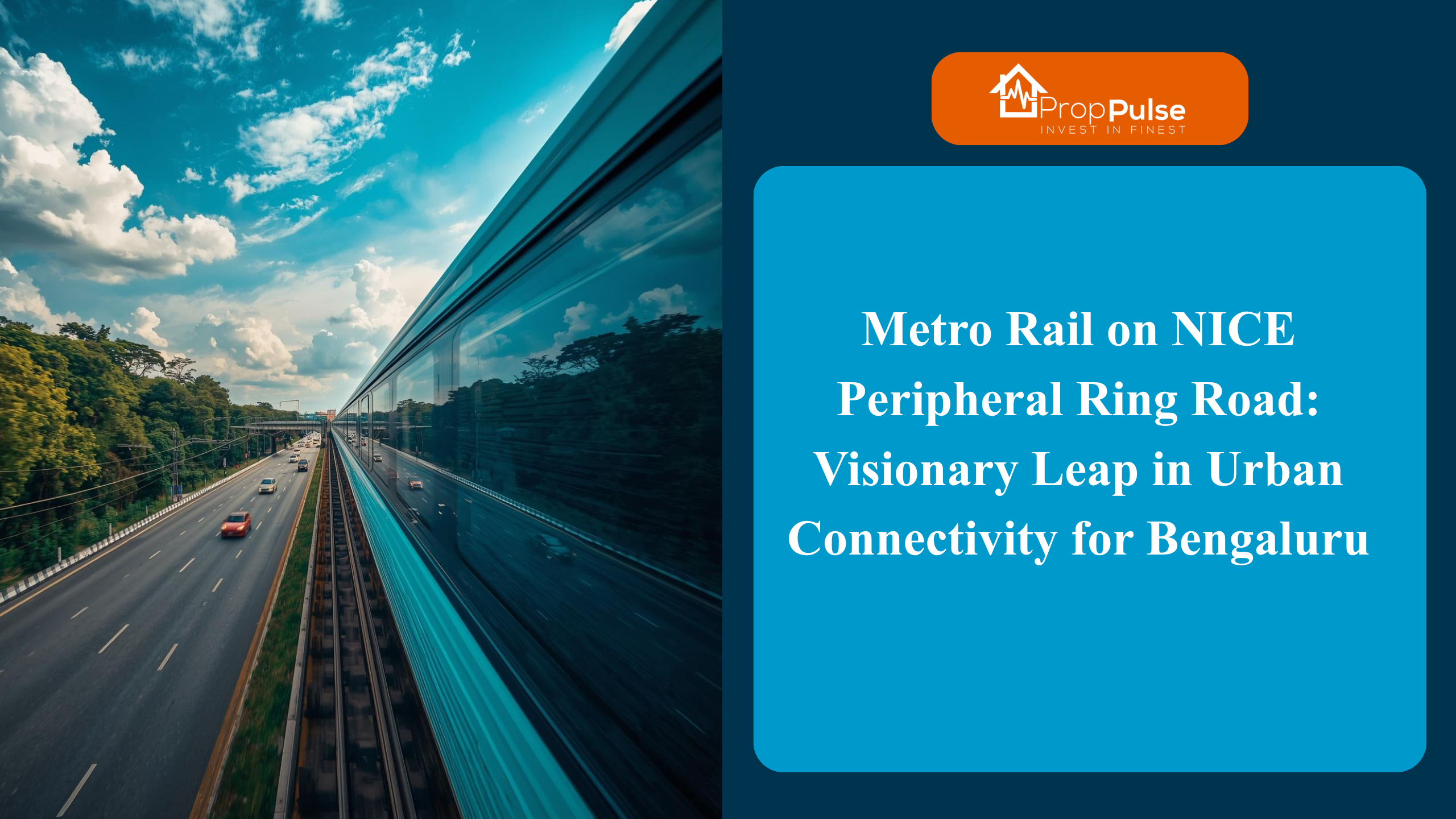
The transport ecosystem of Bengaluru is witnessing a forward-looking moment with the proposal to overlay metro rail along the NICE Peripheral Ring Road. As highlighted in a recent piece by Deccan Herald, this project stands out as a visionary leap in urban connectivity, aiming to weave together the city’s expanding fringes into the mainstream mobility grid.
Project overview
When first conceptualised decades ago, the NICE Peripheral Ring Road was intended as a highway-grade orbital corridor to divert through-traffic from Bengaluru’s core. Today, its broad median and right-of-way are being re-imagined to carry elevated metro tracks a move that reflects a shift from mere road mobility to multimodal transit infrastructure.
This alignment allows the metro to utilise the existing corridor and reduces the need for disruptive new land acquisition while linking diverse nodes residential suburbs, industrial clusters, logistics hubs and expressways.
Why it matters
• Connectivity & Growth: By integrating the peripheral ring road with rapid rail, the project promises to convert what was largely a vehicular bypass into a high-capacity transit spine accelerating growth in the suburbs and reducing pressure on central corridors.
• Urban decongestion: With traffic diversion and mass-transit choices, commuter time may drop, and dependency on private vehicles could reduce substantially.
• Development impetus: Transit-oriented development often follows such linkages. As the article notes, the alignment “demonstrates the foresight” put into the ring road design and now opens up land and opportunity along its route for residential, commercial and industrial development.
• Cost & disruption minimisation: By building on an existing corridor’s median, the infrastructure economy improves, and construction disruption to traffic may be less severe.
Key considerations
• Implementation timeline: Though the concept is compelling, actual timelines, funding models and agency coordination remain to be clarified.
• Ridership & integration: Success will depend on not just the physical alignment but how well feeder services, last-mile connectivity, feeder buses and suburban stations are designed.
• Land-use planning: As growth corridors open up, careful urban planning will be essential to avoid haphazard development and ensure infrastructure (water, power, social amenities) keeps pace.
• Governance & partnerships: The corridor spans multiple agencies and jurisdictions; effective governance and stakeholder collaboration are key.
Outlook
For Bengaluru, the ring road metro alignment offers a bold blueprint: instead of building incremental extensions in the city, it taps into the city’s periphery and ties in future growth zones. If executed well, it may become a model for transit-driven urban expansion not just in Karnataka, but for India’s rapidly evolving metro-regions. As the article frames it, the project is “future-ready infrastructure for modern cities”.
